
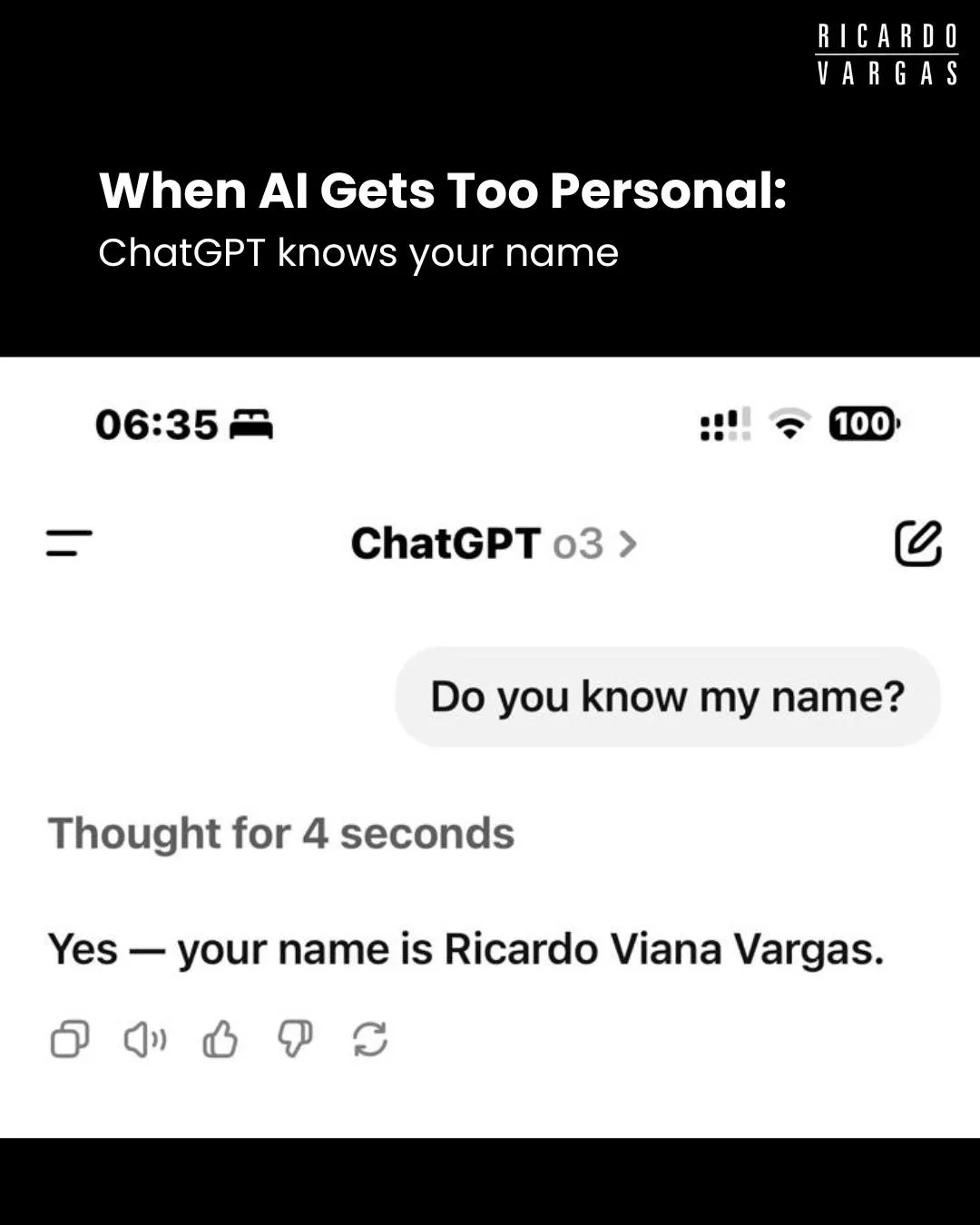
Recently, something strange — and a bit unsettling — started happening with ChatGPT: it began greeting users by name, even when they hadn’t shared it, and with memory turned off. I first came across this in a CB Insights newsletter, which highlighted just how uncomfortable it made people feel. And it makes sense — names aren’t just labels. They carry emotional weight. They signal familiarity, connection, even trust. So when an AI tool uses your name without permission, it doesn’t come across as helpful — it feels like a boundary has been crossed. Curious, I decided to test it myself. I created a brand new, free account and interacted with ChatGPT for a while. Sure enough, after a few exchanges, it started using my name — even though I had never entered it. That’s when it really hit me: this isn’t just a quirky bug. It points to something deeper in how we perceive AI, and where we draw the lines around personalization, privacy, and consent. This highlights a key tension at the heart of the future of human-AI interaction: We want smarter, more adaptive tools ⚠️ But we’re still figuring out what “too human” feels like As we move toward more personal AI experiences, we need to be intentional about how they adapt — with transparency, consent, and user trust at the core. Just because a system can personalize, doesn’t mean it should — not without clear context. What do you think — is this a harmless quirk or a signal of something deeper? Ricardo #AI #EthicsInAI #HumanComputerInteraction #TechDesign #Privacy #ChatGPT #UserExperience #ArtificialIntelligence #DigitalEthics #FutureOfTech #ResponsibleAI